Big Signals in AI and Why They Matter to Your Business
A major shift is happening in artificial intelligence, and it is bigger than a new app or a faster chatbot. It is the kind of shift that changes how decisions get made, how problems get solved, and how competitive advantage is created. When changes like this show up, leaders who notice early can adjust early. That is how you protect your team and position your business to win.
Before we go deeper, this theme is also unpacked in the AI Made Simple podcast. If you want extra examples on how AI can help you lead with more focus and originality, you can watch it on YouTube.
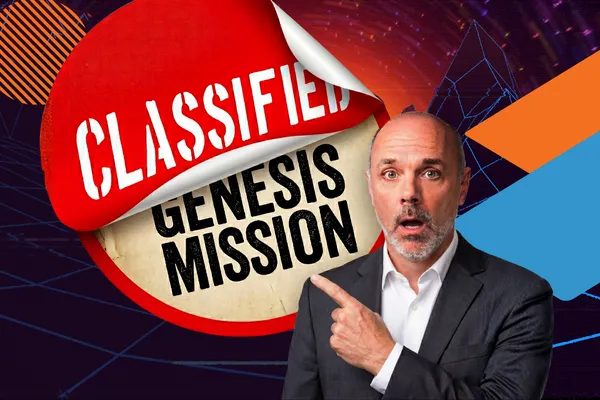
What the “Genesis Mission” Signals
Here is the simple idea: the government is making decades of federal data more usable for AI. Think about what that means. Data is fuel. AI runs on patterns. When large, high-quality datasets become available, the pace of discovery and innovation speeds up.
You can compare this to past moments when the world changed quickly because resources and talent were organized around a clear goal. One famous example is the Manhattan Project, where massive effort and funding were concentrated to solve a difficult problem fast. Today’s AI moment is different, but the signal is similar: when big systems mobilize around data and computing power, the ripple effects eventually reach everyone.
And they usually reach small businesses sooner than people expect.
Not because small businesses have the biggest budgets, but because they can move faster. A large organization may take months to approve a change. A small business can test something this week.
The Opportunity Most Leaders Miss: Your Data Is Already Valuable
When people hear “federal data” or “national mission,” it can feel far away from daily operations. But the real lesson is closer to home: If large institutions are using AI to find patterns in huge datasets, you can use AI to find patterns in your own smaller datasets.
You already have data sitting in tools you use every day:
Calendar and meeting history.
Invoices and payment records.
Customer lists and service histories.
Support tickets and emails.
Project notes and proposals.
Hiring notes and employee performance indicators.
Most businesses do not have a data problem. They have a clarity problem. The data exists, but nobody has time to study it.
AI helps you do that faster, and it helps you turn the insight into action.
How to Think About AI: From Guessing to Seeing Patterns
A lot of leaders run on instinct. Instinct is helpful, but it can also be noisy. AI can help you move from gut feelings to measurable signals.
Instead of saying, “I feel like things slow down in spring,” you can ask, “What happens two weeks before revenue drops?”
Instead of saying, “Hiring is hard right now,” you can ask, “What traits show up in our best employees, and how do we attract more of those people?”
Instead of saying, “We need more customers,” you can ask, “Which current customers are most profitable, and how do we serve them even better?”
This is how you start seeing around the corner. Not by predicting the future perfectly, but by noticing early signs and acting sooner.

Five Practical Ways to Use AI With Your Business Data
Below are five simple, high-impact plays you can run. Each one uses data you already have and turns it into a clear decision.
#1: Spot patterns in your calendar from the last 90 days.
Export your recent calendar data and ask AI questions like:
What types of meetings happen most often?
Which meetings create revenue and which ones create busywork?
What topics keep repeating in customer conversations?
Where are we losing time each week?
Why this matters: your calendar is a map of your priorities. If you do not study it, you will keep repeating the same week.
#2: Identify your best customers and protect those relationships.
Pull a year of invoices and label customers by simple categories:
Pays Fastest
Complains Least
Buys Again
Refers Others
Then ask AI to help you do two things:
Write a friendly note explaining a small price increase in a way that keeps trust.
Create a “thank you” message or appreciation offer for your top customers.
Why this matters: you do not always need new customers to grow. Sometimes you need to take better care of the right ones.
#3: Build a “slow month alarm” before revenue drops.
Take one year of sales, Stripe, or QuickBooks data and ask:
When revenue drops by 10 to 15 percent, what shows up two weeks earlier?
Do cancellations rise first?
Do estimates slow down first?
Do certain customers go quiet first?
Why this matters: most businesses react after the slowdown hits. If you can see early signals, you can run a promotion, re-activate past customers, or tighten costs before it hurts.
#4: Hire with intention by modeling your best people.
This one is powerful and often overlooked.
Gather information from your top performers:
Their resumes or work history.
Notes on how they communicate.
What “good work” looks like in your company.
Then ask AI:
What traits and habits do these people share?
Write a job description that attracts candidates like this.
Suggest interview questions that reveal these traits.
Recommend a referral or reward program for employees to bring in similar candidates.
Why this matters: most hiring is hopeful. This approach is strategic. You are not guessing what you need. You are naming it clearly.
#5: Create a re-engagement plan to stop customer churn.
Look at customers who canceled or stopped buying. Ask questions like:
When do customers usually disappear?
What patterns show up before they leave?
What offer or message might have kept them?
Then ask AI to draft a simple re-engagement campaign:
A check-in message.
A helpful tip or reminder.
A limited-time service offer.
A “we miss you” note that feels human
Why this matters: retention is often cheaper than acquisition. Keeping customers is growth.
What This Means for the Next Few Years
The expectation for businesses is shifting. Customers will start assuming that you use AI, not because it is trendy, but because it improves speed, clarity, and service.
Leaders who ignore this may still survive, but they will feel squeezed. Their competitors will respond faster, price smarter, and communicate better. The gap will not show up overnight, but it will show up.
The best way to prepare is not to chase every tool. The best way is to build confidence through small wins.
Pick one dataset. Ask one smart question. Take one action. Repeat.
That is how you make AI practical. That is how you lead with clarity.
A Simple Next Step
If you want help turning this into a real plan for your team, book a strategy or clarity session with Steve. We will look at your goals, your data, and your bottlenecks, then map out how to use AI to create faster decisions, better communication, and measurable improvements. You do not need more chaos. You need a clear strategy, and we can help you build it.